
Where in Japan? Tap the map.
Pick a place to see what to do, where to stay and what to eat there. Highlighted areas have full guides.
Before you go
The things locals expect you to know, explained simply.
Japanese etiquette for visitors
Nobody expects you to be perfect. These are the habits that make the biggest difference to the people around you.
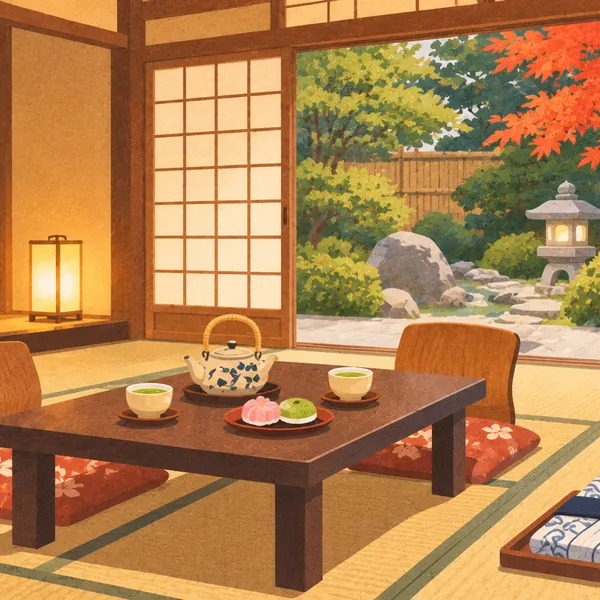
Take your shoes off 靴を脱ぐ
In homes, ryokan, temples and some restaurants, leave shoes at the entrance step (genkan). Use the slippers provided, and take them off again on tatami mats.
DoDon't tip チップ不要
Tipping is not part of Japanese culture and can cause confusion. Good service is included in the price. A simple "arigatou gozaimasu" is enough.
Don'tKeep quiet on trains 車内マナー
Set your phone to silent and avoid calls. Talk softly. Wear your backpack on your front when the train is crowded.
DoBow a little お辞儀
A small nod of the head is a polite greeting or thank-you. You don't need to copy deep business bows; handshakes are fine with most people who offer them.
DoWash before the onsen 温泉
Shower and rinse fully before entering the bath. No swimsuits. Keep your small towel out of the water, often folded on your head.
DoDon't stick chopsticks upright 箸のマナー
Standing chopsticks in rice and passing food chopstick to chopstick both echo funeral rites. Rest them on the holder or across your bowl.
Don'tQueue in line 並ぶ
People line up for trains at marked spots on the platform, and for popular shops. Join at the back and let passengers get off first.
DoEscalators: left or right? エスカレーター
People traditionally stand on the left in Tokyo and on the right in Osaka. Many stations now ask everyone to stand still on both sides.
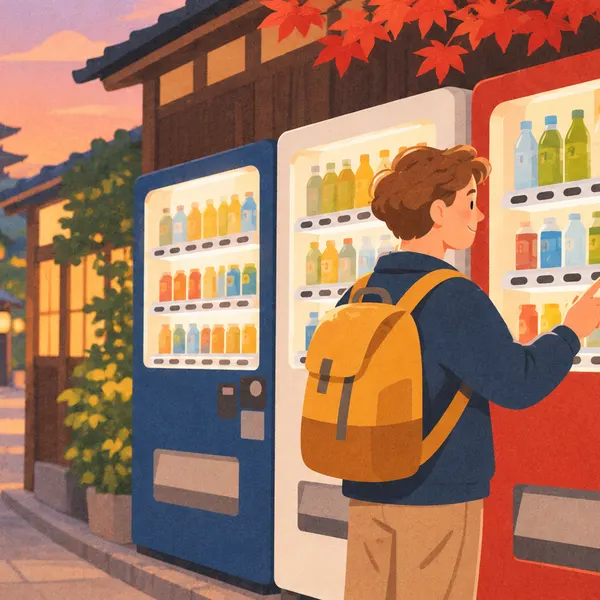
DoDon't eat while walking 食べ歩き
In many places it is seen as rude, and some areas, such as parts of Kyoto, ask visitors not to. Eat near the stall or vending machine.
Don'tRules that can surprise visitors
Some of these are laws, some are local ordinances, and some are house rules. Breaking them can mean a fine or being asked to leave.
Carry your passport 旅券携帯
Short-term visitors must carry their passport at all times. You also need the original passport for tax-free shopping and many hotel check-ins.
Smoke only in smoking areas 喫煙所
Many cities ban smoking on the street, including Tokyo's central wards, with fines. Look for marked smoking areas. Most indoor public places are non-smoking.
Carry your trash ゴミ
Public bins are rare. Take trash back to your hotel, or use bins at convenience stores for things you bought there. Bins are often split by type: burnable, plastic, cans and bottles.
Drinking and smoking age is 20 二十歳
Adulthood is 18, but alcohol and tobacco are still only allowed from age 20. Drinking in public is generally legal, but some areas ban it at certain times.
Zero tolerance for drink-driving 飲酒運転
The legal limit is extremely low, and passengers who ride with a drunk driver can be punished too. If you drink, take a taxi or the train.
Tattoos at onsen and pools タトゥー
Many baths, gyms and pools refuse entry to people with visible tattoos. Some allow small ones covered with a patch. Check before you go, or book a private bath.
Drones need permission ドローン
Flying drones is restricted near airports, over crowds and in most city areas. Many parks and temples ban them completely.
Some medicines are banned 医薬品
Certain common cold and allergy medicines that contain stimulants are not allowed into Japan. Check your medicines with the Japanese embassy before you fly.
Ask before taking photos 撮影
Many temples, shrines and shops forbid photos inside. In Kyoto's Gion, some private lanes ban photography. Never photograph people, including geiko and maiko, without asking.
Eating in Japan
What to try, how to order when the menu is in Japanese, and the small manners that come with each meal.
Sushi 寿司
Conveyor-belt (kaiten) sushi is cheap, fun and often has tablet ordering in English. At a counter, it is fine to eat nigiri with your hands. Dip the fish side, not the rice, in soy sauce.
Ramen ラーメン
Many shops use a ticket machine at the door: pay first, hand the ticket to staff. Slurping is normal and helps cool the noodles. Styles change by region, from Sapporo miso to Hakata tonkotsu.
Izakaya 居酒屋
A Japanese pub with small shared plates. You may get a small starter (otoshi) you didn't order, with a cover charge on the bill. That is normal, not a scam.
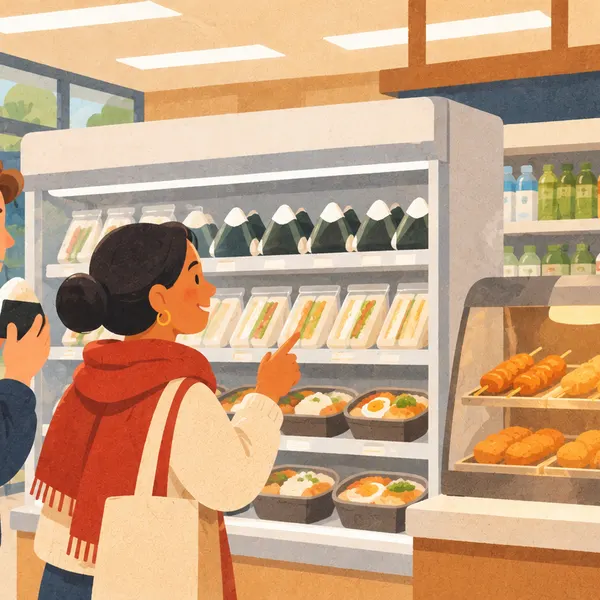
Konbini コンビニ
7-Eleven, FamilyMart and Lawson sell good onigiri, sandwiches and hot snacks around the clock. Staff will offer to heat bento for you.
Before and after eating いただきます
People say "itadakimasu" before eating and "gochisousama deshita" after. Use the wet towel (oshibori) for your hands only, not your face.
Paying the bill お会計
Pay at the register by the door, not at the table. Put cash on the small tray instead of handing it over. Many places now take cards and IC cards.
Okonomiyaki お好み焼き
A savoury pancake cooked on a griddle. Osaka mixes everything into the batter; Hiroshima layers it with noodles. Try both and pick a side.
Wagyu 和牛
Kobe is the famous name, but Matsusaka, Omi and Miyazaki beef are just as prized. Yakiniku, where you grill it yourself, is the cheapest way to try it.
Vegetarian? ベジタリアン
Dashi broth made from fish is in many dishes that look vegetarian, including miso soup. Look for shojin ryori, the Buddhist temple cuisine, which is fully plant-based.
Japan's history in one timeline
Era names still matter in Japan: they appear on forms, coins and calendars. Here are the ones you will hear about most.
- c. 14,000–300 BC
Jomon period
Hunter-gatherers make some of the world's oldest pottery, decorated with cord patterns.
- c. 300 BC–AD 300
Yayoi period
Rice farming and metalworking arrive from the Asian mainland and shape village life.
- 710–794
Nara period
The first permanent capital is built at Nara. Buddhism flourishes, and the Great Buddha of Todai-ji is cast.
- 794–1185
Heian period
The capital moves to Heian-kyo, today's Kyoto. Court culture produces The Tale of Genji.
- 1185–1333
Kamakura period
The first shogunate rules from Kamakura. Samurai become the ruling class, and Zen Buddhism spreads.
- 1336–1573
Muromachi period
Tea ceremony, Noh theatre and Kyoto's Golden Pavilion come from this era, which ends in a century of civil war.
- 1603–1868
Edo period
The Tokugawa shogunate brings over 250 years of peace from Edo, now Tokyo. Contact with the outside world is tightly limited. Ukiyo-e prints and kabuki thrive.
- 1868–1912
Meiji era
The emperor is restored to power. Japan modernises fast, building railways, factories and a new constitution.
- 1926–1989
Showa era
War, defeat in 1945 and occupation, followed by rapid growth. Tokyo hosts the 1964 Olympics and the first shinkansen opens.
- 1989–2019
Heisei era
The bubble economy bursts, and the country rebuilds after the 1995 Kobe and 2011 Tohoku earthquakes.
- 2019–today
Reiwa era
The current era, under Emperor Naruhito. You will see Reiwa years on receipts and forms: 2026 is Reiwa 8.