
Do you know…?
Omamori & omikuji
お守り・おみくじ おまもり・おみくじ · omamori / omikuji
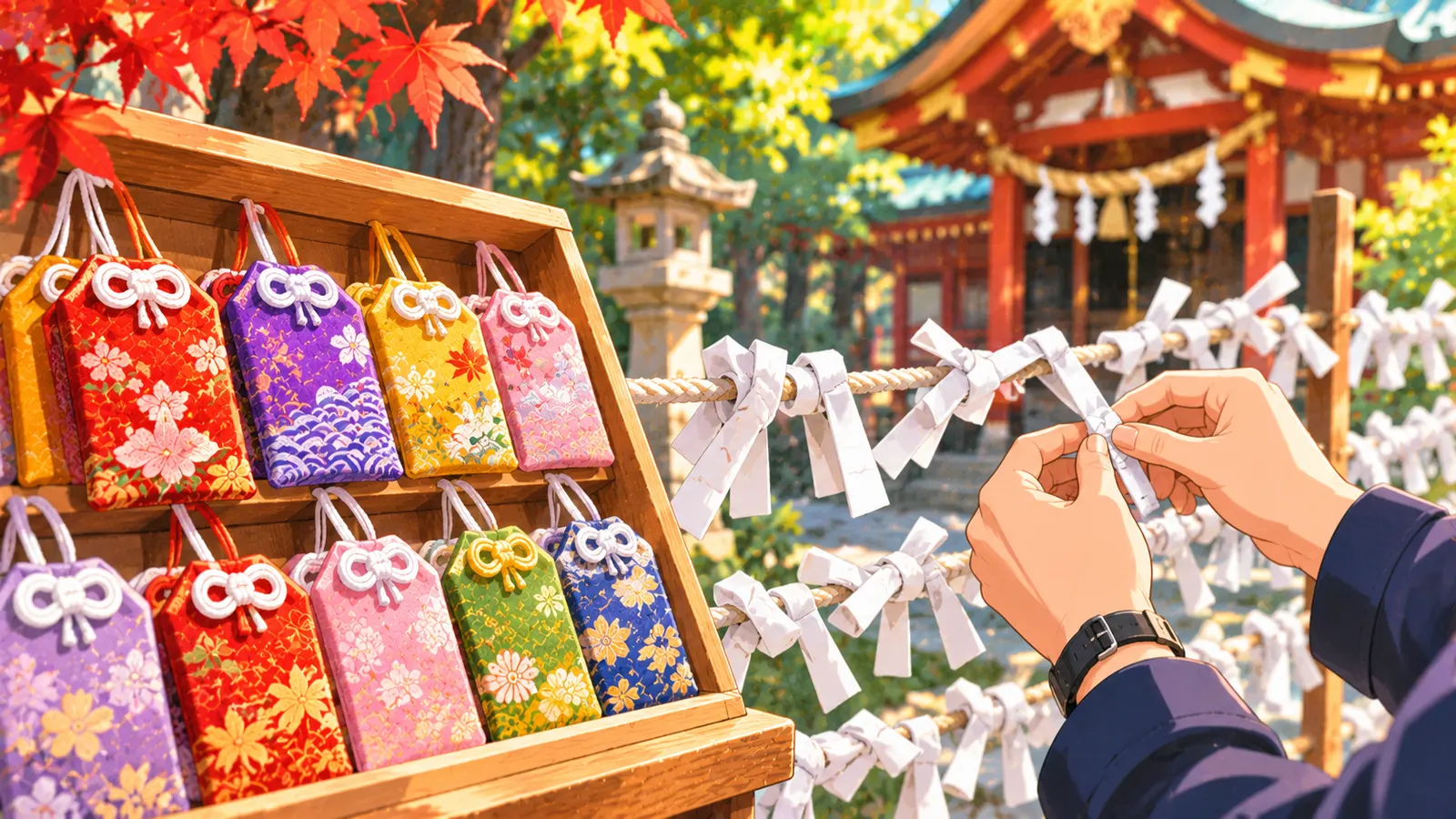
Omamori are small fabric charms sold at shrines and temples for luck, health, safe travel or study. Omikuji are paper fortunes you draw by chance, from great luck to bad luck.
OmamoriCharmsFor safety, health, love, study
OmikujiPaper fortunesSome in English
Bad luck?Tie it at the shrineLeave the bad luck behind
What are omamori and omikuji?
Each omamori has a purpose written on it: kotsu anzen (traffic safety), kenko (health), en-musubi (good relationships) and more. Many people keep them in a bag or on a keyring for a year, then return them to a shrine.
Omikuji are drawn from a box, often for a small fee. Results range from daikichi (great luck) to kyo (bad luck). If you get bad luck, tie it on the rack at the shrine.
How to draw an omikuji
- Pay the feePut the coin in the box or pay at the counter.
- Shake the boxShake out a stick and read the number, or pick a paper.
- Get your fortuneCollect the paper with your number.
- Keep or tie itKeep good fortunes; tie bad ones on the rack.
Do and don't
○
Do keep omamori in a bag or on a keyring
○
Do return old omamori to a shrine or temple
○
Do look for English omikuji
×
Don't open an omamori
×
Don't tie omikuji on trees where it is not allowed
×
Don't throw omamori in the trash
Japanese you will see
お守り
omamori
Charm
おみくじ
omikuji
Fortune slip
大吉
daikichi
Great luck
吉
kichi
Good luck
凶
kyō
Bad luck
交通安全
kōtsū anzen
Traffic safety
Find popular charms
Search the way locals do. Results open in Japanese with a map.
Questions
Can I buy omamori as gifts?
Yes, they make good gifts.
Can I keep a bad fortune?
You can, but people usually tie it at the shrine to leave the bad luck behind.
Please check before you go. Prices, hours and rules can differ from place to place. Last checked November 23, 2026.